
Specifying the most appropriate grade of stainless steel wire & mesh for coastal Queensland environments is a long-term asset protection decision. Queensland’s coastline presents high airborne chloride levels, persistent salt spray and warm temperatures year-round, conditions that accelerate corrosion significantly faster than inland environments.
The choice between 304, 316/316L and Duplex 2205 determines how long a product lasts, how much maintenance it requires and what it ultimately costs over its service life. A poorly informed grade selection in a coastal environment means premature failure, unplanned maintenance and avoidable expense.
SSWM is Australia’s largest stockist of stainless steel wire and mesh. We have specified and supplied wire mesh for coastal projects across Brisbane, the Gold Coast, Sunshine Coast and Far North Queensland, with stock held at our Sunnybank Hills warehouse and same-day despatch for orders placed before 9am.
Why Coastal Queensland Demands Careful Grade Selection
Coastal regions across Brisbane, Gold Coast, Sunshine Coast and Far North Queensland experience conditions that accelerate metal corrosion faster than most environments in Australia:
- High airborne chloride levels
- Salt spray driven inland by prevailing winds
- Persistent moisture and condensation
- Warm temperatures year-round
Our Stainless Steel Coastal Fencing is one example of how SSWM has worked with local Councils on coastal projects designed to break the corrosion cycle and deliver long-term performance.
304 vs 316 vs Duplex: Which Grade Is Fit for Coastal Queensland?
304 Stainless Steel: Suitable for Low-Chloride Environments Only
304 stainless steel offers good general corrosion resistance but limited protection against chlorides.
Typically specified when:
- Projects are well inland and away from direct coastal exposure
- Installations are sheltered or internal
- Chloride exposure is very low
- Applications include Bird Aviaries, indoor enclosures and sheltered architectural mesh
In coastal Queensland, 304 is generally not specified. The chloride environment exceeds its performance limits in most above-grade and exposed applications.

Green Wall Cylinders, Queensland Ballet, Brisbane, Queensland
316 Stainless Steel: The Standard Grade for Coastal Queensland
316 stainless steel contains molybdenum, which significantly improves chloride and pitting resistance. It is the most commonly specified grade for coastal Queensland, offering reliable performance in the vast majority of above-grade and architectural applications.
316 stainless steel is best suited to:
- General coastal exposure
- Architectural Mesh for balustrades, facades and screens
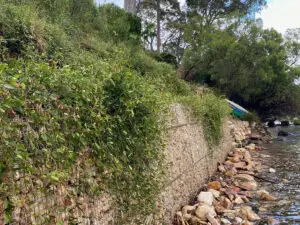
- Gabion Baskets and retaining walls
- Coastal Fencing and screens.
- Installations without direct seawater splash or immersion
- Industrial applications including Quarry and Mining Mesh and Roof Safety Mesh
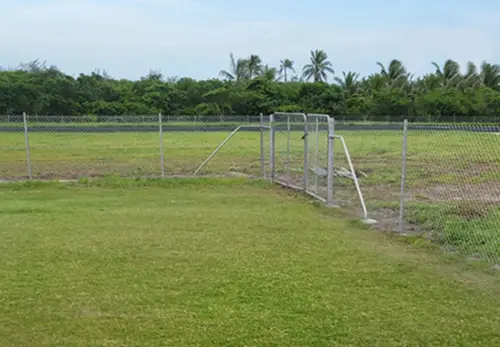
Airport Chainlink Fencing, Far North, Queensland
316L: When to Specify the Low-Carbon Variant
Why Low Carbon Matters in Welded Applications
316L is the low-carbon variant of 316. The distinction matters specifically in welded applications.
316L’s lower carbon content reduces the risk of sensitisation (weld decay) in the heat-affected zone. In thicker or heavily welded components, this preserves corrosion resistance where standard 316 may become vulnerable after fabrication.
316L is commonly specified when:
- Welding is extensive or unavoidable
- Thicker sections are involved
- Maintaining corrosion resistance through the heat-affected zone is critical
316L is typically specified for:
- Welded Mesh Panels
- Reinforcing Mesh in splash‑exposed environments
- Fabricated structures requiring long service life with low maintenance

When Duplex 2205 Should Be Specified
Higher Strength and Higher Corrosion Resistance
Duplex 2205 combines significantly higher yield strength with greater corrosion resistance than the 300-series grades. Where 316 or 316L approach their performance limits, Duplex 2205 provides a meaningful step up in both mechanical and chemical resistance.
Splash Zones, Marine Structures and High-Risk Assets
Duplex 2205 typically specified for:
- Splash zones with frequent or continuous wetting
- Piers, jetties and marine structures
- Bridges and coastal infrastructure
- Projects where access for maintenance is difficult and failure risk is high
Its superior resistance to chloride-induced corrosion and stress corrosion cracking makes Duplex 2205 the specification of choice in the most demanding coastal Queensland environments, where 316 or 316L cannot deliver the required service life.
Not sure which grade suits your project? Talk to SSWM’s Queensland Sales Manager, Tory Greer, for a discussion on grade selection for your specific site conditions and exposure zone.

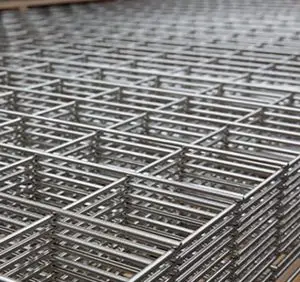
Duplex 2205 Stainless Steel Reinforcing Mesh is often installed for coastal infrastructure.
Stainless Steel Grade | Yield Stress | Corrosion Resistance | Typical Applications |
304 | Moderate | Low-Medium | Inland projects with low chloride exposure |
316 / 316L | Moderate | High | Coastal & industrial environments with no direct splash |
Duplex 2205 | High | Very High | Offshore, bridges, pier splash zones & high load infrastructure |
Choosing between 304, 316, 316L and Duplex 2205 is a long-term asset protection decision. Poor grade selection that is not fit for purpose in a coastal Queensland environment will corrode prematurely, drive up maintenance costs and compromise structural performance over time.
SSWM supplies all four grades of stainless steel wire and mesh, backed by technical expertise, compliance testing and real-world coastal project experience throughout Queensland. Stock is held at our Sunnybank Hills warehouse with same-day despatch for orders placed before 9am.
Talk to SSWM’s Queensland Sales Manager, Tory Greer, for advice on specifying the right grade for your coastal Queensland project.
316 stainless steel wire & mesh is the most commonly specified grade for coastal Queensland applications. Its molybdenum content provides significantly better chloride resistance than 304. For splash zones, marine structures or heavily welded components, 316L or Duplex 2205 should be considered based on site conditions and structural requirements.
316L is the low-carbon variant of 316. The practical difference is weld performance: 316L’s lower carbon content reduces the risk of sensitisation (weld decay) in the heat-affected zone. This makes it the preferred specification for applications involving extensive welding or thicker fabricated sections.
Duplex 2205 should be specified when the application involves direct seawater splash, immersion or high structural loads in a corrosive coastal environment. Piers, jetties, bridges and coastal infrastructure are common use cases where 316 or 316L cannot deliver the required service life.
Generally no. 304 offers limited chloride resistance and is not specified for coastal Queensland except in cases of extremely limited exposure, such as sheltered internal applications well away from direct coastal conditions. For most coastal applications, 316 is the minimum recommended grade.
Yes. SSWM holds stock at its Queensland warehouse in Sunnybank Hills, Brisbane, with same-day despatch for orders placed before 9am. All grades are available across wire mesh, welded mesh panels, reinforcing mesh and fencing products for coastal and industrial applications.