

Bushfire Mesh Shield
INSTALLATION GUIDE
EFFECTIVE AND EASY TO INSTALL
Bushfire Mesh Shield is specifically engineered to safeguard your home from ember attacks, radiant heat and direct flame during a bushfire. Installing Bushfire Mesh Shield has never been easier. Our step by step guide will walk you through each phase ensuring you have all the information you need to successfully complete your project.
Bushfire Mesh meets the ember protection requirements of AS 3959:2018 Construction of buildings on a bushfireprone area.

UNDERSTANDING YOUR BUSHFIRE ATTACK LEVEL & INSTALLATION
The Australian Standard (AS3959-2018) Construction of buildings in bushfire-prone areas uses a scale referred to as the Bushfire AttackLevel (BAL). It is a means of measuring the severity of a building’s potential exposure to ember attack, radiant heat, and direct flame contact. The Flame Zone (FZ) is the highest level of bushfire attack.


BAL - LOW
There is insufficient risk to warrant any specific construction requirement, but there is still some risk.
RELEVANT CONSTRUCTION SECTION FROM AS 3959:2018
Section 4

BAL - 12.5
There is a risk of ember attack.
RELEVANT CONSTRUCTION SECTION FROM AS 3959:2018
Section 3 & 5

BAL - 19
There is a risk of ember attack and burning debris ignited by wind borne embers and a likelihood of exposure to radiant heat.
RELEVANT CONSTRUCTION SECTION FROM AS 3959:2018
Section 3 & 6

BAL - 29
There is an increased risk of ember attack and burning debris ignited by windborne embers and a likelihood of exposure to an increased level of radiant heat
RELEVANT CONSTRUCTION SECTION FROM AS 3959:2018
Section 3 & 7

BAL - 40
There is a much increased risk of ember attack and burning debris ignited by windborne embers, a likelihood of exposure to a high level of radiant heat and some likelihood of direct exposure to flames from the fire front.
RELEVANT CONSTRUCTION SECTION FROM AS 3959:2018
Section 3 & 8

BAL - FZ
There is an extremely high risk of ember attack and burning debris ignited by windborne embers, and a likelihood of exposure to an extreme level of radiant heat and direct exposure to flames from the fire front.
RELEVANT CONSTRUCTION SECTION FROM AS 3959:2018
Section 3 & 9
RELEVANT CONSTRUCTION SECTION FROM AS 3959:2018
Section 4
Section 3 & 5
Section 3 & 6
Section 3 & 7
Section 3 & 8
Section 3 & 9

BAL - LOW
There is insufficient risk to warrant any specific construction requirement, but there is still some risk.
BAL - 12.5
There is a risk of ember attack.
BAL - 19
There is a risk of ember attack and burning debris ignited by wind borne embers and a likelihood of exposure to radiant heat.
RELEVANT CONSTRUCTION SECTION FROM AS 3959:2018
Section 4
Section 3 & 5
Section 3 & 6

BAL - 29
There is an increased risk of ember attack and burning debris ignited by windborne embers and a likelihood of exposure to an increased level of radiant heat
BAL - 40
There is a much increased risk of ember attack and burning debris ignited by windborne embers, a likelihood of exposure to a high level of radiant heat and some likelihood of direct exposure to flames from the fire front.
BAL - FZ
There is an extremely high risk of ember attack and burning debris ignited by windborne embers, and a likelihood of exposure to an extreme level of radiant heat and direct exposure to flames from the fire front.
RELEVANT CONSTRUCTION SECTION FROM AS 3959:2018
Section 3 & 7
Section 3 & 8
Section 3 & 9
Understanding your property’s Bushfire Attack Level (BAL) is crucial when considering the installation of bushfire mesh. As BAL ratings increase, so do the requirements for protective measures, including the type and installation method of bushfire mesh.
For properties rated BAL-12.5 to BAL-40, Bushfire Mesh Shield should be installed over all openings, including windows, doors, and vents, to prevent ember entry. It is important to note that Bushfire Mesh should be used in conjunction with other home hardening strategies to form a comprehensive bushfire protection zone.
HEAR FROM THE EXPERTS
Bushfire Resilience Incorporated (BRI)* has produced a bushfire mesh installation video featuring and discussing Bushfire Mesh Shield. This video provides insight into the effectiveness of Bushfire Mesh.
* BRI is an independent community-led orgabisation based in Victoria that’s objective is to educate communities on the risks of Bushfire and actions that can be taken to reduce these risks.
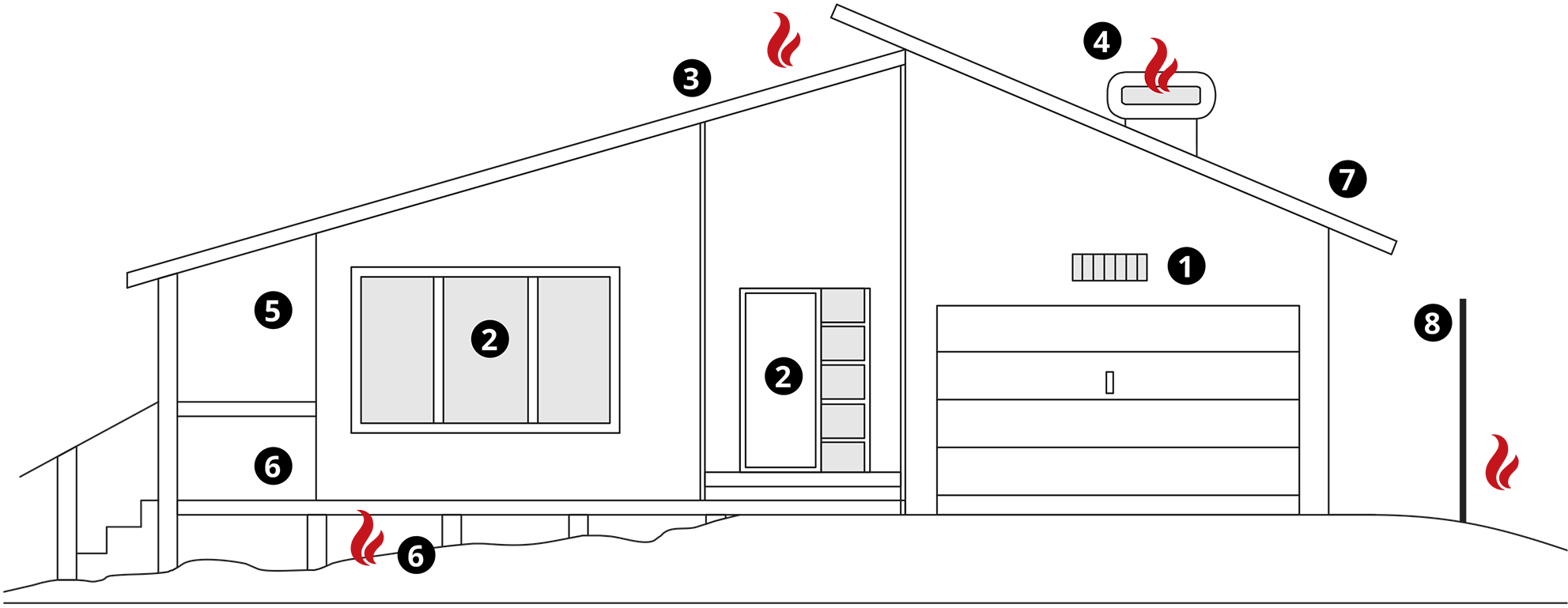
VULNERABLE IGNITION POINTS
Protecting your home effectively involves the proper installation of bushfire mesh over vulnerable ignition points across your home. Our Bushfire Mesh Shield is designed to meet and exceed the stringent requirements of AS3959, and provide bushfire protection for your home.

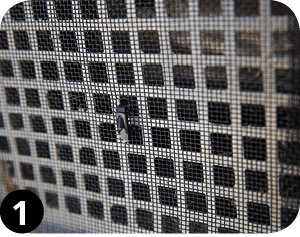
Vents & Weepholes
Vents and weepholes are critical ignition points as they provide direct pathways for embers to enter and ignite the structure from within.

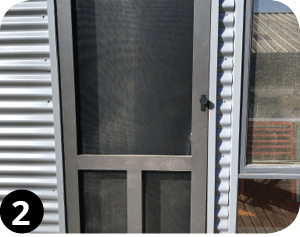
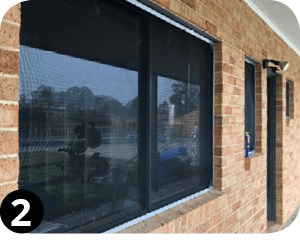
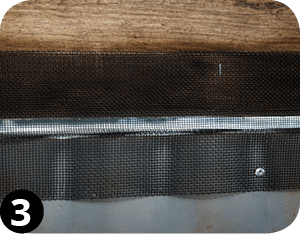
Windows & Doors
Windows and doors can easily become ignition points during a bushfire as embers can penetrate through gaps, while the intense heat can cause the glass to break, leading to interior fires.

Roofs
Gaps in roof tiles, unprotected eaves, and unsecured roofing sheets can allow embers to penetrate the roof space.

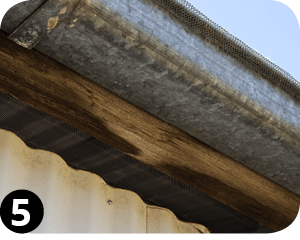
Evaporative Air Cooling Systems
Evaporative air cooling systems are ignition points because embers can be drawn into the system, igniting the internal components and spreading fire throughout the home.

Eaves & Awnings
Eaves and awnings are vulnerable to ignition as they can trap embers, allowing them to smolder and ignite the roof structure.

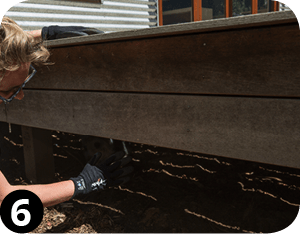
Subfloor Spaces, Verandahs & Decks
Subfloor spaces and decks are susceptible to ignition because embers can accumulate underneath and ignite wooden materials or debris.

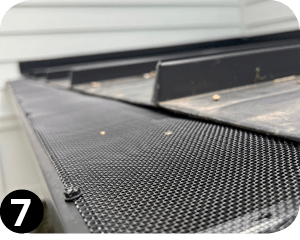
Gutters & Valley Leaf Guard
Gutters are a significant ignition point because they can collect leaves and debris, which can easily catch fire when embers land on them.

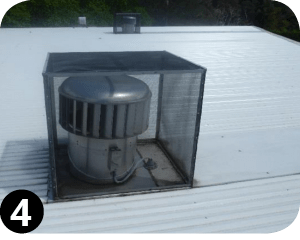
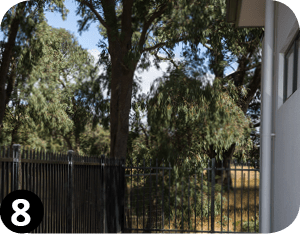
Perimeter Fence
The base of fences often accumulates leaves, twigs, and other combustible debris, providing ready fuel for ignition.
EXPLORE OUR PROJECTS
From Western Australia to Woodend in Victoria, we’ve worked closely to help support our customers shield their homes from the three threats of Bushfire.
BUSHFIRE ATTACK LEVEL (BAL) ASSESSMENT
Understanding Bushfire Attack Level (BAL) is essential for anyone who want to protect their property from bushfire risks. BAL rates how much your home could be exposed to dangers like embers, heat, and flames during a bushfire. By knowing your property’s BAL, and your application you can choose the Bushfire Mesh Shield that will be appropriate for your home.


| Bushfire Attack Level (BAL) | Description | Section from AS 3959: 2018 Construction section |
| Low | Insufficient risk to warrant specific construction requirements | Section 4 |
| 12.5 | Ember attack | Section 3 & 5 |
| 19 | Increasing levels of ember attack and burning debris ignited by windborne embers together with increasing heat flux | Section 3 & 6 |
| 29 | Increasing levels of ember attack and burning debris ignited by windborne embers together with increasing heat flux | Section 3 & 7 |
| 40 | Increasing levels of ember attack and burning debris ignited by windborne embers together with increasing heat flux with the increased likelihood of direct contact with flame | Section 3 & 8 |
| FZ | Direct exposure to flames from fire front in addition to heat flux and ember attack | Section 3 & 9 |
BAL Rating | Low | 12.5 | 19 | 29 | 40 | Flame Zone (FZ) |
|---|---|---|---|---|---|---|
SSWM Suitable Product | Flexi | Flexi | Tough | Tough | Extreme & Ultimate | Extreme & Ultimate |
- Flexi – aperture of 1.23mm and wire diameter of 0.18mm
- Tough – aperture of 1.67mm and wire diameter of 0.45mm
- Extreme – aperture of 1.51mm and wire diameter of 0.8mm
- Ultimate – aperture of 1.64mm and wire diameter of 0.9mm
- Fire danger index of the region
- The vegetation classification
- The distance from the building to the fuel load
- The slope of the area
- Ember Attack – Small burning combustible material that are transported by the wind
- Radiant Heat – The heat generated from a fire that is transferred using radiation waves
- Direct Flame – The heat generated through conduction of a flame to an object
- SSWM Product Selection Guide & Planning Guide are great resources and tools to select the most appropriate mesh for your application. A customer will need to consult and confirm with their local fire authority or Bushfire Planning and Design (BPAD) Accredited Practitioner and contact your local council to ensure that you are meeting all the building and AS3959-2018 requirements. Remember Bushfire Mesh is a part of the total solution.
- It is manufactured to ISO 9000 Quality Standards
- It is strong and can keep animals and insects out of protected spaces
- Available in black powder coated finish and blends into the environment
- Provides a privacy feature when installed
- Supplied with additional wires, top and bottom to make securing easy
- Has been independently tested and passas all the Australian Standards (AS 3959)
- Meets the Respective Australian Building Codes
- Meets the Highest Bushfire Attack Level BAL-FZ requirements
- Class A rated product per UL 723 / ASTM E84
- When there is no fire situation: The Bushfire Mesh (woven mesh) allows airflow and will allow areas that get wet to dry out
- When there is a Fire situation: The Bushfire Mesh (woven mesh) allows airflow and the mesh acts as a filter that “knocks out” embers as they are carried by the winds
- Solid metal barriers deflect the wind up and over the fence leaving the ember in the wind allowing the ember to enter the defendable space
- Solid fences require large footings as they are subject to the full force of the wind
- Woven Mesh is strong and it keeps its shape
- Stainless steel has a high melting point and the research states that the protection should be able to withstand 900+ degrees C where as aluminium Melts at 700 Degrees C
- Stainless steel is non corrosive and low maintenance where as galvanised steel loses its non corrosive protection over time
- Stainless steel is non combustible and will not increase your building fire load
- Stainless steel can reflect Radiant heat resulting in a lower temperature on the non fire side. This lower temperature will reduce the likelihood of fire continuing beyond the barrier
- Non combustible
- Non-corrosive
- Opening size less than 2mm
Our showroom and dispatch operate from 8:30am to 3:30pm, Monday to Friday. We are closed on weekends and public holidays.
Yes, we welcome visitors! Please prearrange your visit so we can assist you without interruption and ensure the right team member is available.
We accept payment via EWAY or direct deposit (EFT). For security reasons, we do not accept credit card details over the phone.
Absolutely. You’re welcome to arrange your own freight provider. Please notify us in advance so we can coordinate pickup and documentation.
Orders received before 9:00am are dispatched same day. Orders received after 9:00am will be dispatched the next business day.
Yes. Once your order is dispatched, we’ll send you a tracking link or consignment number via email.
We have a technical datasheet for each product:
These include a to scale image, specifications, dimensions and weights. These are found on the website product page under the “PRODUCT SPECIFICATION” tab. We also include a link to the relevant datasheet in all quotes, proformas and invoices.
We stock pre-cut rolls in 15 metre and 30 metre lengths.
Yes. We offer volume-based pricing and trade discounts for approved resellers and commercial customers. Contact us for a quote.
Yes. Pickup is available from our Tullamarine, VIC or Sunnybank Hills, QLD warehouse. Please confirm your pickup time so we can have your order ready.
Bushfire Mesh is supplied as a DIY or contractor-installed product. We do not offer installation services but can recommend experienced installers in your area and you can refer to our SSWM Bushfire Mesh DIY Guide.